

LED displays
Lumepix designs and installs LED displays for businesses, retail spaces, real estate properties, and conference rooms. We provide complete solutions covering technical design, installation, and ongoing support. We do not offer off-the-shelf retail products — each project is engineered according to the space, intended use, and long-term reliability requirements.
Lumepix's LED Display Solutions:
01Indoor LEDOffice · Retail · Lobby
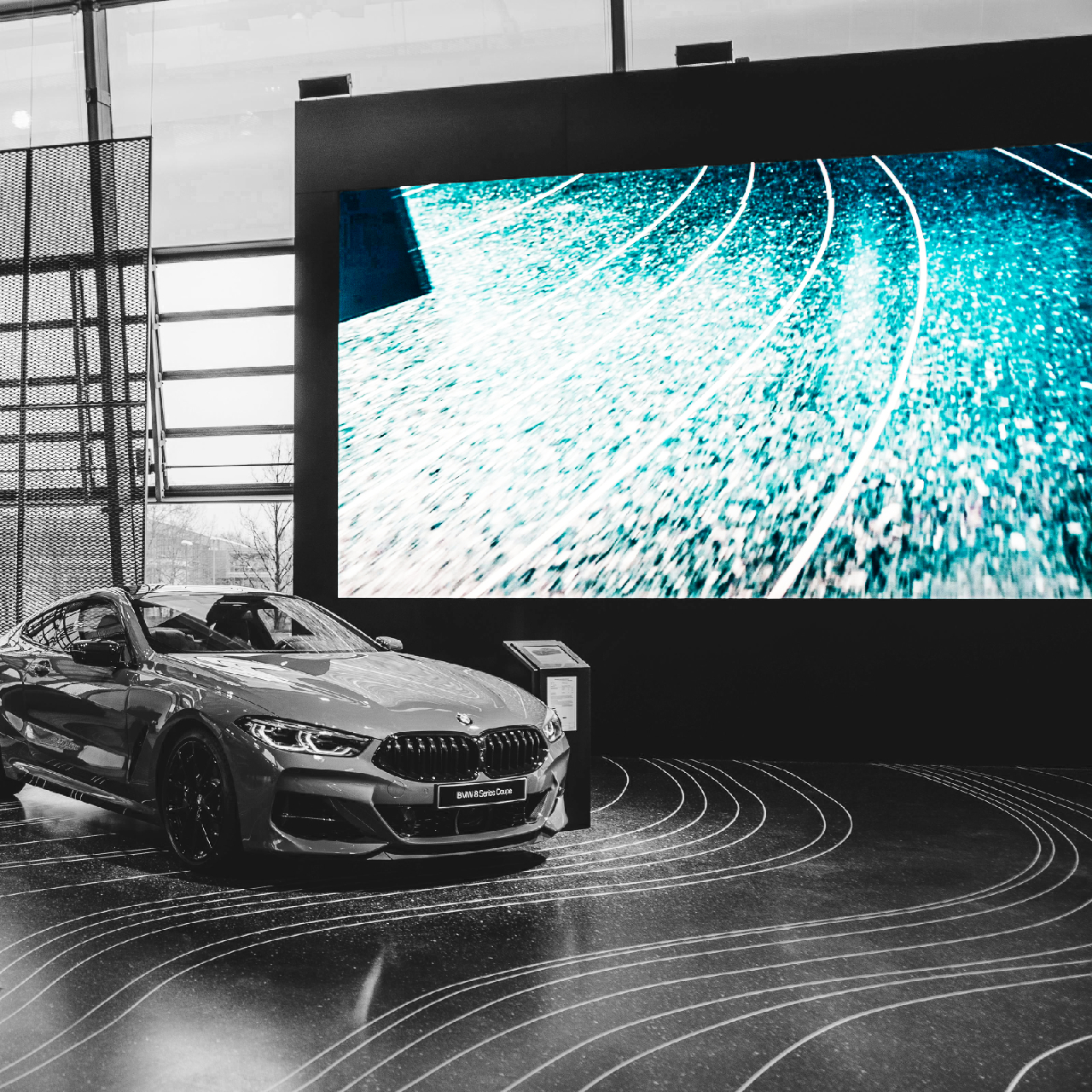
› High-resolution indoor LED screens — ideal for advertising, information displays, and brand communication in offices, shopping centers, and lobbies.
Main technical features:
- Pixel Pitch 0.4–4 mm
- Brightness 600–1500 nits
- Lifespan 100,000 Hours
- Operating Temperature -10°C…+45°C
- Modular design
- Magnetic-Mount Modules
02Outdoor LEDFacade · Outdoor Advertising · Sports Venue
› A durable IP56–IP68 rated screen for outdoor use — readable even in bright sunlight and built to withstand Estonia's climate year-round.
Main technical features:
- Pixel Pitch 2.5–16 mm
- Brightness 5,000–12,000 nits
- Operating Temperature -30°C…+60°C
- IP56–IP68 Protection Rating
- Automatic Brightness Adj.
- Aluminum or Steel Housing
03Rental LEDConcert · Trade Show · Conference
› Modular, quick-to-install LED for events — lightweight aluminum housing, magnetic or locking connections, and flexible mounting options.
Main technical features:
- Brightness 1,000–10,000 nits
- Refresh Rate 3840–7640 Hz
- Operating Temperature -20°C…+50°C
- Magnetic and Locking Connection
- Rigging, Frame, and Stage Wall
- Fast Assembly and Disassembly
04Sports LEDStadium · Indoor Arena · Sports Center
› LED screen built for stadiums and indoor arenas — real-time scores, advertising, and instant replays. An impact-resistant frame protects players and balls.
Main technical features:
- Brightness 5,000–8,000 nits
- Refresh Rate 3840–7640 Hz
- IP65–IP68 Protection Rating
- Operating Temperature -30°C…+60°C
- Impact-Resistant Frame
- Modular, Customizable Size
05Home and CinemaHome Cinema · Private Screening Room
› High-contrast LED screen for home cinema — accurate color, true black levels, and deep dynamic range for enjoying movies, games, and multimedia.
Main technical features:
- Pixel Pitch 0.4–2 mm
- 4K and 8K Resolution
- Contrast 10,000:1+
- HDR10, Dolby Vision
- Dolby Atmos, DTS:X Sound
- Refresh 120–240 Hz
06All-in-One LEDConference Room · Control Center
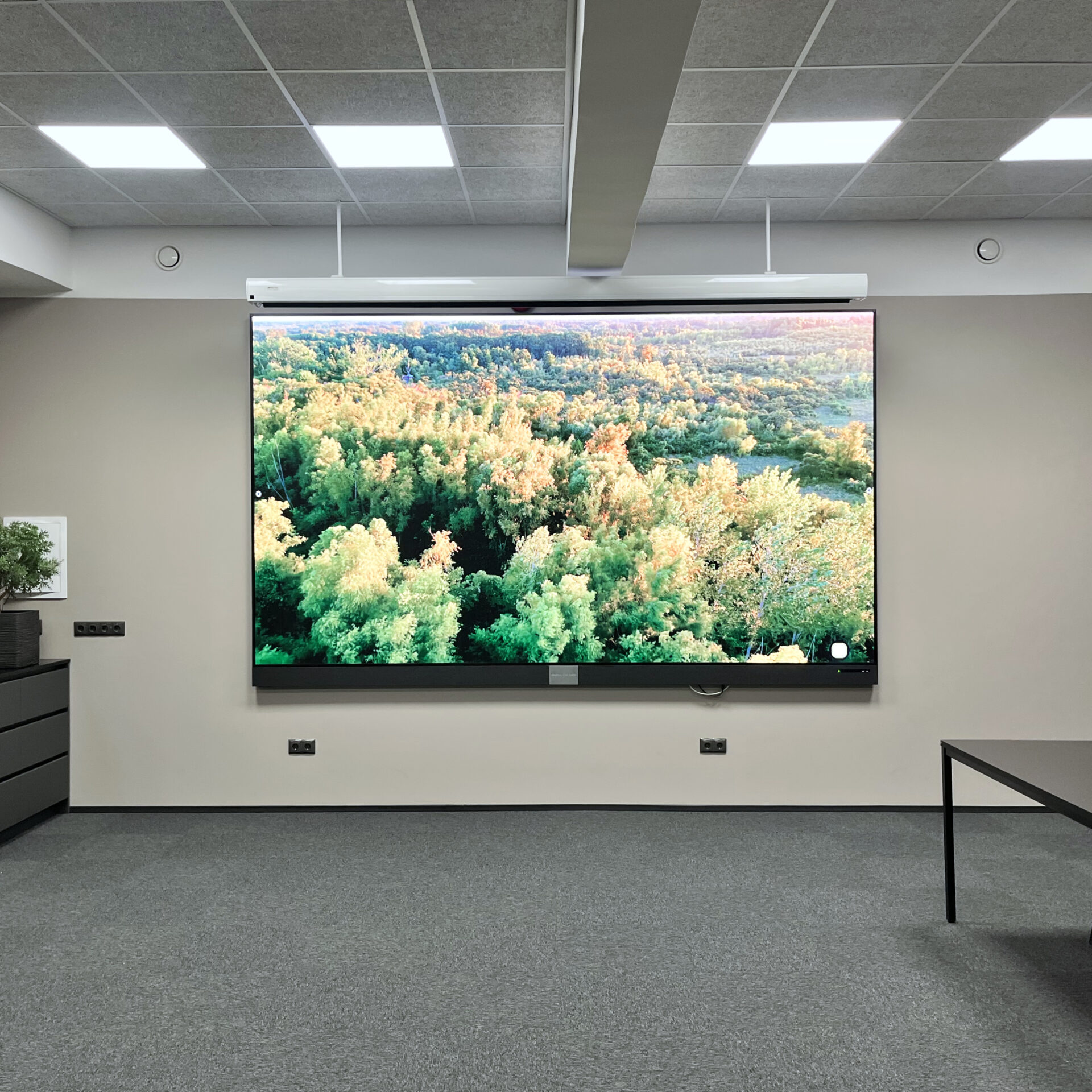
› A complete solution for conference rooms and control centers — LED screen, built-in audio, control system, and wireless presentation capability all in one device.
Main technical features:
- 4K resolution
- Brightness 500–1,000 nits
- Teams, Zoom, Meet support
- AirPlay, Miracast, Cast
- HDMI, USB-C, DisplayPort
- Android/Windows integrated
LED Display Technical Specifications:
01 Brightness
NITs (cd/m²) › Brightness determines how well the image is visible under different lighting conditions. The brighter the environment, the higher the brightness required. Brightness is measured in nits, or candelas per square meter (cd/m²).
Indoor 800–1500 Nits Office · Retail · Lobby
Semi-outdoor 2500–4000 Nits Direct Sunlight indoors
Outdoor environment 5000–12 000 Nits Facade, Outdoor Advertising, Stadium
- Automatic brightness adjustment saves 20–40% on energy and extends lifespan
- Excessive brightness indoors causes eye strain — the wrong choice is just as harmful as too dim
- Brightness and energy consumption are directly linked — higher brightness means higher consumption
02 Energy consumption
W/m² › LED screens are 30–50% more energy-efficient than LCD video walls of equivalent size. Actual consumption depends on screen size, brightness level, the content displayed, and the LED technology used.
Indoor LED Average 100–300 W/m² In a Typical Indoor Space
Indoor LED Maximum 200–600 W/m² Full Brightness, White Content
Outdoor LED Average 250–450 W/m² In Outdoor Conditions
Outdoor LED Maximum 600–1200 W/m² Full Brightness, Direct Sunlight
- Brightness level is the biggest factor — outdoor screens require many times more power than indoor screens
- Displayed Content — dark content consumes up to 50–70% less energy than a full white image
- Modern Power Supplies (92–96% efficiency) and automatic brightness adjustment significantly reduce ongoing costs
- Pixel Pitch and LED Density — a smaller pitch means more LEDs and higher consumption per square meter
03 Pixel pich
mm (P-value) › Pixel pitch (P-value) is the distance between two adjacent LED diodes, measured in millimeters. It determines the screen's resolution and the ideal viewing distance — the smaller the pitch, the more detailed the image and the closer the ideal viewing distance.
| Pixel pich | Minimum Viewing Distance | Suitable For |
|---|---|---|
| P0.4–P1.5 | 0.5–2 m | Control rooms, conference halls, broadcast studios |
| P1.5–P2.5 | 2–4 m | Offices, meeting rooms, lobby information screens |
| P3–P6 | 4–10 m | Shopping centers, events, larger lobbies |
| P8–P16 | 10–30 m+ | Facade, Outdoor Advertising, Stadium |
- Too fine a pixel pitch for a large viewing distance is an unnecessary expense — the image looks equally good either way
- Pixel pitch has a direct effect on price — a P1.5 screen is significantly more expensive than a P3 screen of the same surface area
- The right choice depends on the location, room dimensions, and budget
04 Viewing angle
120°–160° › Viewing angle indicates the angle from which the image remains clearly readable without color distortion or a drop in brightness. LED screens generally offer a significantly wider viewing angle than LCD screens, which is especially important in larger spaces.
Standard LED 120°–140° Most Indoor LED Screens
With Extended Viewing Angle 140°–160° Outdoor Screens, Stadiums
- Viewing angle is affected by the LED diode type and the protective solution used (lens, GOB coating)
- LCD screens typically have a horizontal viewing angle of 178°, but the drop in brightness when viewed from the side is greater
- In stadiums and public spaces, a wide viewing angle is critically important — every viewer needs to see the same image
05 Lifespan
100 000 h › The nominal lifespan of LED screens is 100,000 hours at 50% average brightness — roughly equivalent to 8–10 years of continuous operation. Actual lifespan depends on operating temperature, the brightness level used, and maintenance.
Nominal Lifespan 100 000 h At 50% Average Brightness
Years (24/7) ≈ 11 years Continuous Operation, 50% Brightness
In Years (12h/day) ≈ 22 years Typical Business Use
- Higher brightness shortens lifespan — operating at 100% brightness can cut lifespan in half
- Cooling is critical — high operating temperature is the leading cause of premature wear in LED modules
- The modular design allows individual LED modules to be replaced without replacing the entire screen
- Regular maintenance (dust removal, connection checks) significantly extends lifespan
06 Water and dust resistance
IP-class › The IP rating (Ingress Protection) indicates the screen's level of protection against foreign objects and water. The first digit represents dust resistance (0–6), and the second represents water resistance (0–8). The conditions at the installation site determine the required IP rating.
| IP-class | Protection | Suitable For |
|---|---|---|
| IP20 | Finger-touch protected, no water protection | Dry indoor spaces, offices, retail |
| IP54 | Dust-tight, splash-resistant | Production facilities, semi-open spaces |
| IP65 | Dust-tight, water-jet resistant | Outdoor conditions, facades, semi-outdoor |
| IP67 | Dust-tight, temporary immersion | Outdoor advertising, damp environments |
| IP68 | Dust-tight, temporary immersion | Outdoor conditions, stadiums, beaches |
- For Estonia's climate, we recommend at least IP65 for outdoor screens — rain, snow, and moisture are everyday conditions
- GOB (Glue on Board) coating adds physical protection to indoor screens without changing the IP rating
- A higher IP rating means a better-protected housing, which affects both price and thermal management
LED technologies:
DIP ›
Dual In-line Package Traditional Outdoor Screen
10 000 Nits Brightness
P10–P31 Pixel pich
IP65–67 Protection
Brightness7 500–10 000 Nits
Pixel pichP10–P31
Work temp.−40°C…+60°C
IP-classIP65–IP67
Viewing angle~110°
Lifespan100 000 h
Main features:
- Very High Brightness of 7,500–10,000 nits — especially well-suited to direct sunlight conditions
- Exceptionally Durable Construction — withstands moisture, vibration, and temperature fluctuations from −40°C to +60°C
- Large Pixel Pitch P10–P31.25 — minimum viewing distance is typically 10 meters
- Narrower Viewing Angle ~110° — but with brightness more focused for distant viewers
- Single-Color Diodes, R, G, B Separate — strong primary colors, lifespan of up to 100,000 hours
- Excellent Heat Dissipation — the LED legs conduct heat directly away from the circuit board
Typical Use CasesRoadside billboards, stadium scoreboards, intersection information screens, perimeter advertising
SMD ›
Surface-Mounted Device Universal standard
800–10 000 Brightness (nit)
P0,9–P10 Pixel pich
140–160° Viewing angle
Brightness800–10 000 nitti
Pixel pichP0,9–P10
Viewing angle140–160°
Gamma95–110% Rec.709
Lifespan80 000–100 000 h
TechnologyRGB 3-in-1
Main features:
- High Brightness 800–10 000 nitti — suitable for both indoor conditions and 24/7 outdoor use
- Wide Pixel Pitch Range P0.9–P10 — solutions for both close-up and mid-range viewing
- Wide Viewing Angle 140–160° — suited to screens that require consistent color reproduction from different viewing positions
- 3-in-1 RGB technology — smooth color blending and a uniform image surface without color distortion
- Available in Many Housing Types – SMD1010, SMD1515, SMD2020, SMD2525, SMD3535 jt
- Color Gamut ~95–110% Rec.709 — sufficient for most commercial applications
Typical Use CasesShopping center screens, conference halls, control centers, retail digital signage, facade screens
HOB ›
Hybrid On Board Professional Studio and Rental Market
600–1 500 Brightness (nit)
P0,9–P2,5 Pixel pich
20 000:1 Contrast
Brightness600–1 500 nitti
Pixel pichP0,9–P2,5
Contrast20 000:1
Viewing angle160°+
RepairIndividual Pixel
Lifespan100 000+ h
Main features:
- Small pixel pich P0,9–P2,5 — suited to close-up viewing and high-resolution screens
- Better Impact and Scratch Resistance Than SMD — thanks to individual pixel encapsulation
- Easier to Repair Than COB — individual pixels can be replaced separately
- High Contrast Ratio of up to 20,000:1 — deeper black thanks to the capsule's surface finish
- More Uniform Image Surface Than SMD — less moiré effect when filming on camera
- Wide Viewing Angle 140–160° — comparable to the best SMD solutions
Typical Use CasesTV studios, virtual production backdrops (XR/LED volume), control centers, the rental market, and top-tier commercial screens
GOB ›
Glue On Board Protected SMD for Outdoor Use
IP65+ Protection class
P1,2–P4 Pixel pich
+20–30% Longer lifespan
Protection classIP65+ front
Pixel pichP1,2–P4
Lifespan vs. SMD+20–30% more
Touch supportYes, direct contact
Fire ResistanceUL94 V-0
Price vs COBLower
Main features:
- High Mechanical Durability — protects the surface against scratches, impacts, and accidental contact damage
- IP65+ Protection — Moisture and Dust Resistance on the Front Surface — suitable for outdoor conditions and public spaces
- Longer Lifespan Compared to Standard SMD — on average 20–30% more operating hours
- Enables Touch Interaction — the resin protective layer withstands direct contact without damage
- Fire Rating UL94 V-0 — meets strict safety requirements in public buildings
- Lower Cost Than COB — while retaining most of the durability benefits
Typical Use CasesOutdoor screens, transport hubs (airports, railway stations), stadiums, high-traffic areas, interactive touchscreens, museums
COB ›
Chip on Board Premium Indoor Screen and Broadcast
25 000:1 Contrast
P0,4–P1,8 Pixel pich
110–120% Gamma
Pixel pichP0,4–P1,8
Contrastmax 25 000:1
Gamma110–120% Rec.709
Protection classIP65 front / IP54 rear
SurfaceUniform, Continuous
Lifespan100 000+ h
Main features:
- Ultra-Fine Pixel Pitch P0.4–P1.8 — suited to ultra-high-resolution applications
- Extremely Even Light — reduces the hotspot effect compared to SMD solutions
- Less Glare, Softer Light — thanks to a larger emission surface
- High Contrast Ratio of up to 25,000:1 — thanks to the deep-black surface coating
- Color Gamut 110–120% Rec.709 / ~95% DCI-P3 — suitable for professional camera reproduction
- IP65 Protection on the Front and IP54 on the Back — dust- and scratch-resistant construction
Typical Use CasesControl centers, premium-class conference halls, broadcast studios, cinema and event applications, corporate solutions
MIP ›
Micro LED in Package Next-Generation Commercial Technology
30 000:1 Contrast
P0,4–P1,5 Pixel pich
−30–40% Power consumpt.
Pixel pichP0,4–P1,5
Contrast30 000:1+
Gammaup to 130% Rec.709
Power consumpt.−30–40% vs SMD
Defect Rateunder 1 ppm
Adoption2024–2026
Main features:
- Ultra-Fine Pixel Pitch P0.4–P1.5 — suited to the highest-resolution screens
- Individually Tested LED Components — consistent color accuracy, with a defect rate below 1 ppm
- Easier to Repair Than COB or MicroLED — individual MIP components can be replaced
- High Contrast Ratio of 30,000:1+ — thanks to the small emitting areas
- 30–40% Lower Energy Consumption – võrreldes samasuure SMD-ekraaniga
- Rapid Industry Adoption 2024–2026 — positioned in price between SMD and MicroLED
Typical Use CasesPremium virtual production stages, top-tier home cinema systems, luxury retail digital walls, professional color-grading monitoring, architectural installations
μLED ›
MicroLED Top Tier — Maximum Image Quality
∞ contrast Pixel level
P0,3–P0,9 Pixel pich
140%+ Rec.709 Gamma
Pixel pichP0,3–P0,9
Brightnessmax 5 000 nit
ContrastInfinite (Pixel)
Gamma140%+ Rec.709
Response Timeunder 1 ns
Lifespan100 000+ h
Main features:
- Smallest Possible Pixel Pitch P0.3–P0.9 — enables 4K and 8K resolution even on diagonals under 100 inches
- Infinite Contrast Ratio — each pixel switches fully on or off, as with OLED
- No Burn-In — no degradation of organic materials occurs (unlike with OLED)
- Highly Accurate Color Reproduction and a Wider 140%+ Rec.709 Color Gamut — better than with OLED technology
- Response Time Under 1 ns — suited to gaming and scientific visualization
- Stable Operation Even at High Brightness — suited to professional applications and HDR content
Typical Use CasesUltra-high-budget broadcast backdrops, flagship store centerpiece displays, scientific visualization centers, exclusive home cinemas, world-class control centers
We are trusted by: