



Ekraanilahendused
Lumepix offers professional-grade displays that differ from consumer televisions in terms of technical construction, functionality and durability. These displays are built for 24/7 operation, intensive use and the demanding conditions of public spaces, providing stable performance, a longer lifespan and manufacturer-backed technical support. Major manufacturers such as Samsung and LG offer specialised commercial displays for offices, conference rooms, retail environments and outdoor use, where consumer devices would not be reliable or durable enough.
Screens for Business Use:
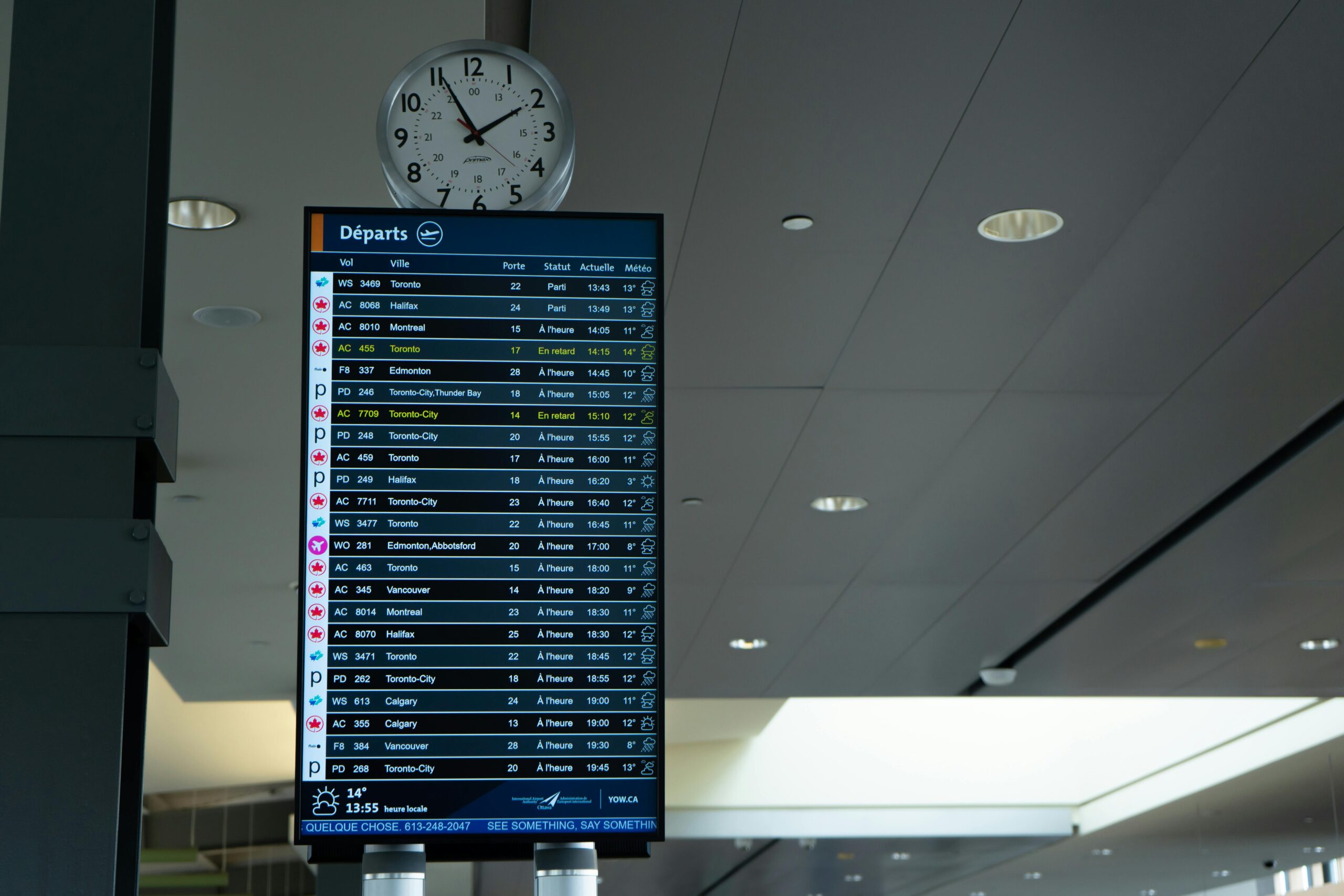
Digital Signage LCD displays are commercial-grade screens designed for continuous and reliable operation in various business environments. These displays present dynamic content—advertisements, notifications, directions and real-time information—while maintaining consistent image quality even under high usage loads.
Main features:
Long-lifecycle panels – designed for 16/7 or 24/7 operation, offering greater durability than consumer televisions
High resolution and brightness levels – clear and high-contrast image even in brightly lit environments (700–4000 nits)
Centralized content management – remote control, scheduling and content management through integrated signage software
Thin profile and narrow bezels – aesthetic design, easy to integrate into video walls, kiosks or wall/ceiling-mounted installations
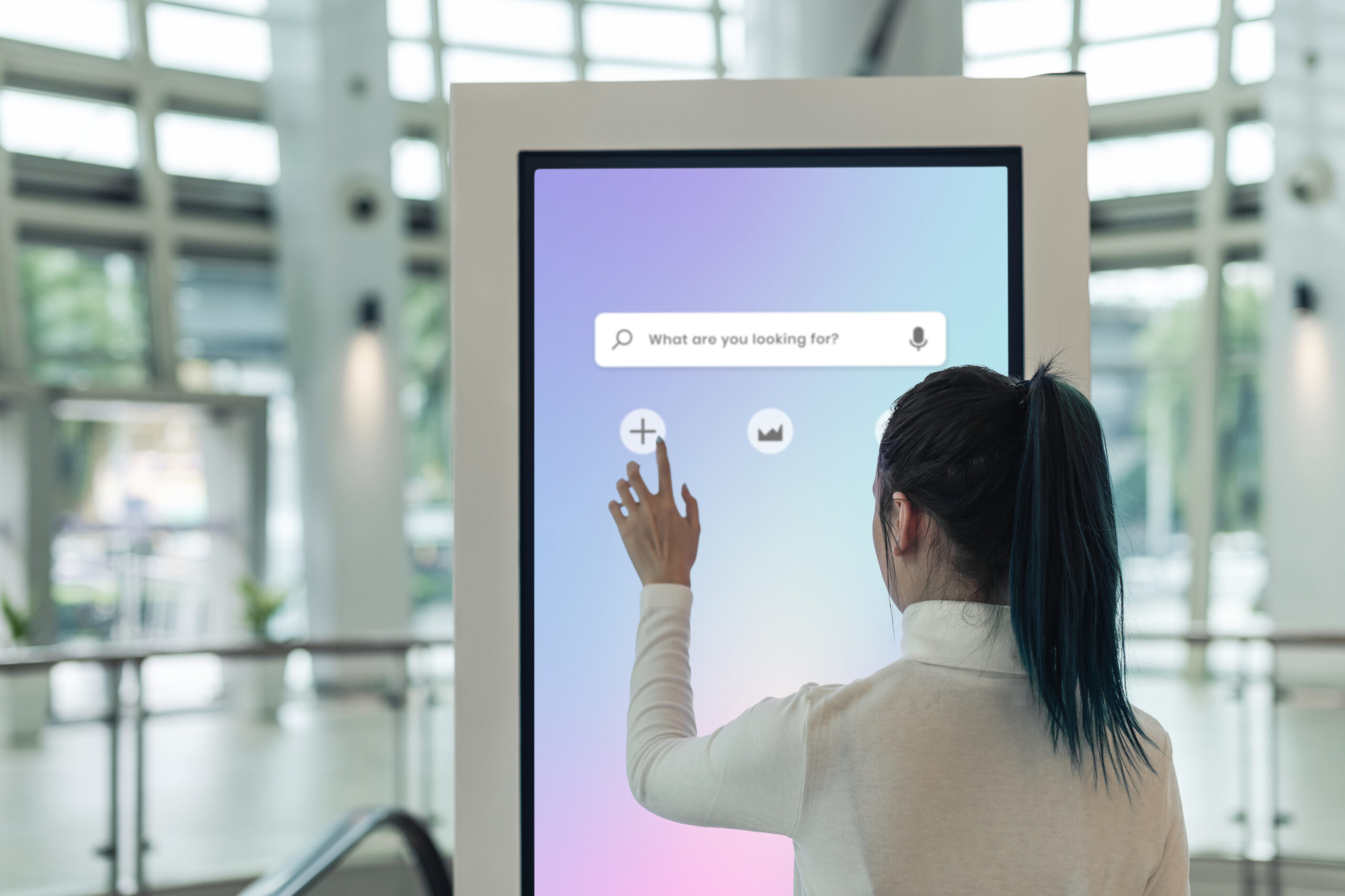
Touchscreen LCD displays allow users to interact directly with the device through the screen surface, providing an intuitive user experience and increasing engagement. They are widely used in information systems, self-service kiosks, education, industrial applications and business environments.
Main features:
Various touch technologies – capacitive (Projected Capacitive), resistive, infrared (IR) and optical touch solutions depending on the use case
Multi-touch support – enables simultaneous touches, gestures and smooth interaction
Durable construction – scratch-resistant surface coatings, tempered or chemically strengthened glass
Easy integration – compatible with computers, media players, signage systems and self-service kiosks
High precision and fast response – works with finger, stylus and simultaneous multi-user input
Weatherproof LCD displays are commercial-grade screens specifically designed for outdoor environments, capable of withstanding extreme weather conditions such as rain, snow, dust, UV exposure and significant temperature fluctuations. Their durable construction and very high brightness ensure clear visibility even in direct sunlight, along with stable 24/7 operation in public spaces.
Main features:
IP56 or higher protection rating – dust-, moisture- and vandal-resistant enclosure, suitable for permanent outdoor installation
Very high brightness (2500+ nits) – ensures readable image even in direct sunlight
Wide temperature tolerance (-30°C to +50°C) – built-in active cooling and heating systems
Anti-reflective and UV-protective glass – reduces glare and protects the display from long-term sun exposure
Video walls are professional high-resolution displays with ultra-thin bezels, designed to be combined into a single large visual surface. These screens are built for 24/7 operation and are ideal for control rooms, conference spaces, retail environments and large-format visual installations where uniform and dynamic image performance is required.
Main features:
Ultra-narrow bezels (bezel-to-bezel <1 mm) – ensure seamless image continuity with minimal panel separation
Modular design – installation in various configurations (2×2, 3×3, 4×4, ultra-wide formats, etc.)
High resolution – supports 4K and 8K input for creating large display surfaces
Automatic color calibration – uniform brightness and color balance across the entire video wall matrix
Wide signal compatibility – HDMI, DisplayPort, video processors, daisy-chain connectivity and centralized content management
24/7 operational capability – suitable for continuous use in control rooms, advertising installations and public environments
Video conference LCD displays are professional-grade screens designed for use in meeting rooms, conference halls and remote collaboration environments. These displays provide high-quality visuals, integrated audio and camera solutions, and seamless compatibility with leading video conferencing platforms such as Microsoft Teams, Zoom, Google Meet and Cisco Webex.
Main features:
High resolution (4K UHD, HDR support) – delivers sharp visuals and accurate color reproduction
Large screen sizes (55″–98″) – optimal visibility for meeting rooms of various sizes
Integrated or standalone VC cameras – with AI features such as auto-framing and speaker tracking
High-quality audio – built-in wide-range speakers and noise-cancelling microphones
Touchscreen variants – suitable for interactive presentations, note-taking and real-time collaboration
Flexible connectivity – HDMI, USB-C, DisplayPort, LAN, Wi-Fi, wireless sharing (Miracast, AirPlay)
Full support for Microsoft Teams Rooms and Zoom Rooms solutions – plug-and-play experience with certified hardware
A digital LCD whiteboard is a modern interactive display that allows users to write, draw and annotate directly on the screen. It is used in education, business environments and team collaboration, providing a paperless solution and a smart, real-time cooperative experience.
Main features:
Touch and pen support (IR, P-Cap or EMR technology) – natural writing feel and precise input
4K UHD resolution – sharp and detailed image, suitable for both presentations and educational use
Real-time collaboration – sharing notes via cloud services (OneDrive, Google Drive, Dropbox)
Built-in software – whiteboard tools, annotation features, and support for PDF and Office documents
Wireless sharing – Miracast, AirPlay, Chromecast and USB-C single-cable interface (video + power + touch return)
Multi-user support – simultaneous writing and interaction by multiple participants
Scratch-resistant and durable surface – tempered or chemically strengthened glass for frequent use
Integrated video conferencing support – compatible with Zoom, Microsoft Teams and Google Meet solutions; optional built-in camera and microphone system
Most Common Diagonal Sizes of LCD Screens
13" → 288 × 162 mm
24" → 531 × 299 mm
32" → 708 × 398 mm
43" → 953 × 536 mm
46" → 1 020 × 574 mm
50" → 1 109 × 624 mm
55" → 1 218 × 685 mm
65" → 1 446 × 813 mm
75" → 1 670 × 940 mm
85" → 1 892 × 1 065 mm
98" → 2 181 × 1 227 mm
110" → 2 447 × 1 376 mm
1920 × 1080 (Full HD) – the most widely used resolution; good image quality and affordable price, suitable for small and medium-sized displays.
2560 × 1440 (QHD / 1440p) – higher sharpness than Full HD, popular for work, graphics and gaming; offers better detail and more workspace.
7680 × 4320 (8K UHD) – ultra-high resolution for very large displays and critical applications (studios, control rooms); technically demanding and more expensive, but increasingly popular in professional use.
7680 × 4320 (8K UHD) – üliterav resolutsioon väga suurtele ekraanidele ja kriitilistele rakendustele (stuudiod, juhtimiskeskused); tehniliselt nõudlik ja hinnalt kallim, kuid muutub järk-järgult populaarsemaks professionaalses kasutuses.
60–75 Hz – standard refresh rate for office and commercial displays; suitable for document work, information screens and general use.
120–144 Hz – higher refresh rate that provides smoother motion; suitable for videos, animations, interactive solutions and gaming.
240–360 Hz – very high refresh rate for professional e-sports and fast-moving content; provides minimal motion blur and the best response times.
CCFL (Cold Cathode Fluorescent Lamp) – an older backlight technology that uses cold-cathode lamps. Provides uniform illumination but has lower energy efficiency, slower start-up time and limited brightness compared to LED-based solutions.
LED backlighting (Edge LED / Direct LED) – the modern standard in LCD displays. Provides higher brightness, better energy efficiency and longer lifespan, and enables thinner display enclosures. Direct LED variants also support local dimming.
MiniLED backlighting – the most advanced LCD backlight technology, using thousands of tiny LEDs that enable more precise local dimming. This results in deeper blacks, higher contrast, reduced halo effect and improved HDR performance. Suitable for professional and large-format display solutions.
Screen Usage Areas
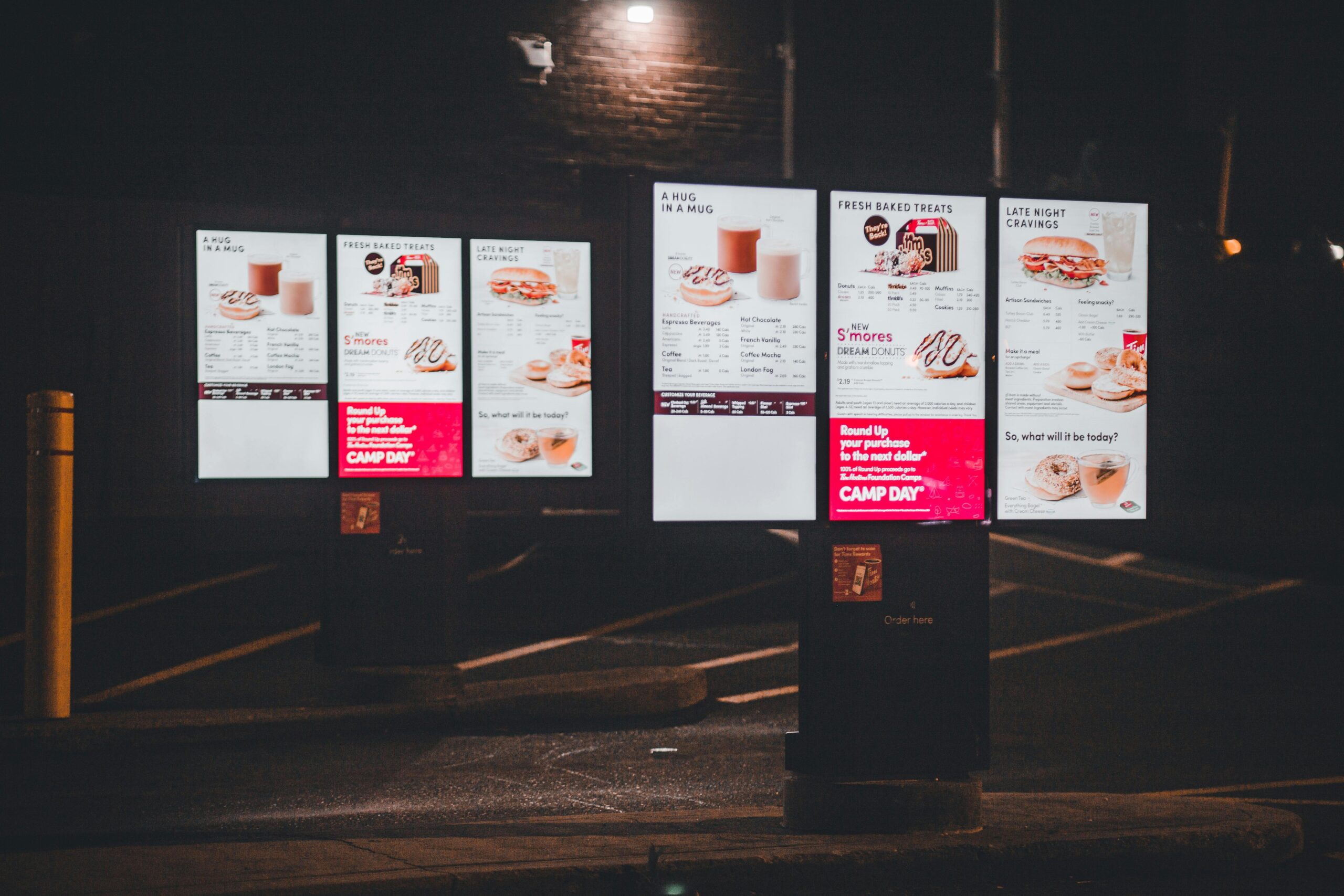
- indoor environments – depending on the use case, displays come with either 16/7 or 24/7 operation; with lower or higher backlight brightness (350–700 nits)
- storefront window in direct sunlight – requires enhanced cooling and a minimum brightness of 1500 nits
- Outdoor environments – minimum IP56 rating and, if needed, a vandal-resistant enclosure
Older LCD panel technology that offers fast response times but limited color accuracy and narrow viewing angles.
Suitable for: budget monitors and fast-response displays.
The screen provides better contrast and deeper blacks compared to IPS, but has narrower viewing angles.
Suitable for: televisions, signage and commercial displays where contrast is important.
High color accuracy, wide viewing angles and uniform image quality.
Suitable for: professional work, offices, video conferencing, design and commercial displays.
(Currently the most widely used panel type in commercial displays.)
An LCD display that uses LED backlighting.
Edge LED: thinner design, with lighting positioned along the edges.
Direct LED: more uniform illumination, higher brightness and better energy efficiency.
Suitable for: all modern signage and commercial displays.
An LED LCD display in which the color gamut is enhanced with a Quantum Dot layer.
Result: more vibrant colors and higher brightness.
Suitable for: bright environments, advertising and presentation displays.
An LCD display with small LED backlight units (thousands of dimming zones).
Pros: very high brightness, improved contrast, deeper blacks.
Suitable for: window displays, studio equipment, HDR screens.
Each pixel is a self-emitting light source.
Result: perfect blacks, high contrast and the best image quality.
Drawback: risk of burn-in.
Suitable for: premium displays, studio work and critical visual applications.
OLED pixels combined with Quantum Dot color layers.
Pros: higher brightness and wider color gamut than standard OLED.
Suitable for: high-quality signage, studios and design applications.
Each pixel contains a microscopic LED, with no LCD layer or backlight.
Pros: ultra-sharp image, exceptional brightness control, zero burn-in risk.
Suitable for: very large premium displays, concert venues and control rooms.
Low power consumption, readable in direct sunlight.
Suitable for: static notifications, price tags and information displays.
Do you have a question?
We are trusted by: